Des chercheurs de l'Université Polytechnique de Valence, ainsi que de la Plateforme Solaire d'Almeria sont actuellement en train d'évaluer de nouvelles stratégies pour le traitement des eaux, mettant à profit la photocatalyse solaire et l'ozone, dans le cadre du projet du Plan National Aquafotox.
L'eau est une ressource indispensable, et malgré les 71% d'eau qui constituent le globe, à peine 2,5% sont potables. Disposer de réserves d'eau douce ou disposer de moyens de produire sur demande de l'eau potable représente donc un intérêt stratégique.
En el día de hoy se ha cerrado el plazo de presentación de candidaturas para participar en Etorkizuna Elkarrekin Eraikiz! (E3!). Finalmente se han recibido 43 CVs de personas interesadas en participar en la iniciativa.
A partir de ahora se inicia el proceso de selección de las personas candidatas a emprendedores. Esta labor será llevada directamente a cabo por las empresas participantes en E3!.
Se espera que este proceso concluya en el plazo de 15 días. A partir de ahí, se remitirá el conjunto de la documentación a LANBIDE, con objeto de tramitar el convenio de prácticas no laborales en empresas.
If solar power is to become a primary source of electricity around the world, we’ll need cheap ways to store energy from the sun when it isn’t shining. A paper published in the journal Science this week reports a major step toward such a system. Researchers have developed a device that cheaply and efficiently converts the energy in sunlight into hydrogen, which can be used as a fuel and is easily stored.
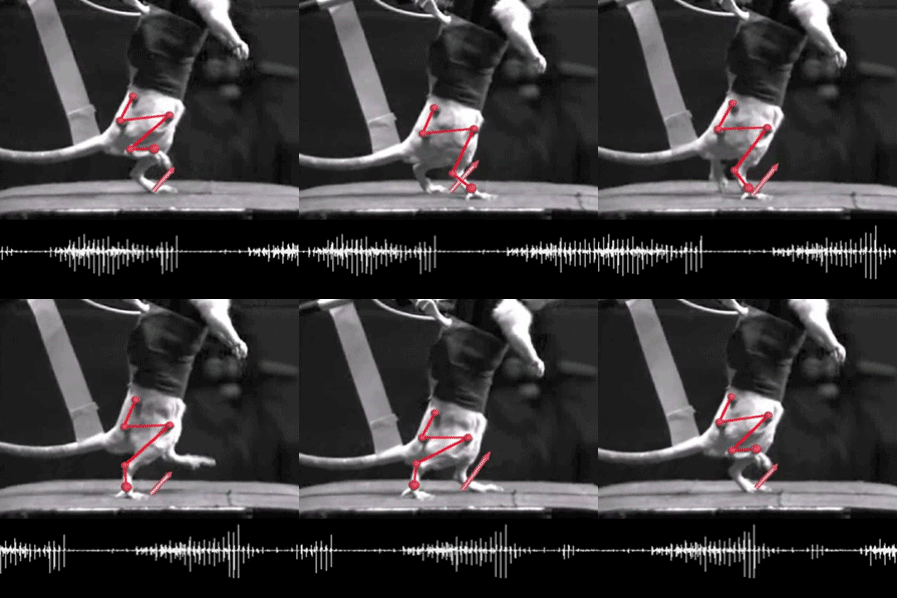
It’s a strange sight: a paralyzed rat walking on its hind legs in a precise cadence, all controlled by a computer.
“It is a little bit Frankenstein,” says Gregoire Courtine, a neuroscientist at the École Polytechnique Fédérale in Lausanne, Switzerland, who in a paper published yesterday in Science Translational Medicine describes his efforts to use electronics to restore fluid, realistic movements to paralyzed animals.
En el marco de las políticas de empleo de su Fondo de Contribución para Educación y Promoción Cooperativa y otros Fines de Interés Público correspondiente al ejercicio de 2013, ABANTAIL S.COOP. ha realizado una donación económica para el desarrollo de la iniciativa KIMU BERRI, proyecto cuyo objetivo es la promoción del emprendimiento juvenil en Debagoiena, adoptando para ello las temáticas y tecnologías propias de la sociología de la juventud.
La contribución realizada a KIMU BERRI por ABANTAIL S.COOP. ha permitido a esta entidad:
Giant pharmaceutical companies have spent billions of dollars trying to crack Alzheimer’s disease, only to come up empty time after time. For small, cash-strapped biotechs, the challenge is even harder. Tufts University professor Philip Haydon is trying to make the improbable journey anyway.
Haydon has created GliaCure, a tiny startup run out of his Boston condominium, to go after a target often overlooked in drug development: microglial cells, one of the family of cells that provide the “glue” to hold together the brain’s hard-working neurons. And he’s about to find out if he’s on to something.
Here’s the scene: A problem has come up with one of your supply chain vendors, threatening to delay timely shipment of your product. At the same time, a potential opportunity appears that, with some exploration and investment, could lead to a new generation of products down the road. Which do you respond to first?
There has been considerable hand wringing in recent months about research (pdf) showing a decline in American entrepreneurship, a fall in “economic dynamism” (the turnover of companies and jobs), and an overall aging of U.S. businesses. In the face of pessimistic long-term growth forecasts from the World Bank, International Monetary Fund, and Federal Reserve, these findings are worrying.
There have been some great strides in telemedicine lately. This virtual way to see the doctor cuts down on commutes, wait time and potential costs associated with in-person visits. But most of what’s currently out there requires some sort of video conferencing system and a set appointment with the doctor. Spruce is a new app that aims to let you converse with the doctor at your own convenience. The app, the brainchild of former Kleiner Perkins Caufield & Byers partner Ray Bradford, launched in the App Store this morning.