Portrait de Mikel Orobengoa

Organización: 

ISEA

ThoughtSpot Raises $50M for Business Data Search Engine.

“The consumption of data by humans has increased maybe millions of times compared to what we used to use,” Ajeet Singh says. “This is possible because of search.”

By that, serial entrepreneur Singh means search engines like Google and Microsoft’s Bing, which instantly scour websites to find us a restaurant, an audiobook, or the name of an actor that eludes us. But Singh (pictured) is also one of the innovators who have been extending the territories of data that can be interrogated by new machines seeking quick answers, patterns, or simply unexpected caches of compelling information.

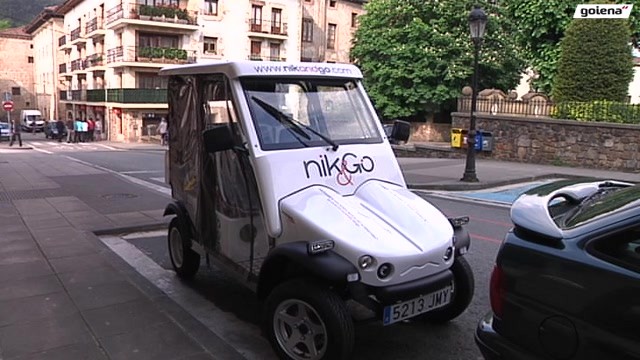
Ibilgailu elektrikoaren inguruko azterketa egiten ari da Oñatiko Udala.

Aztertzen ari dira ibilgailu elektrikoak herrian errentagarriak izango liratekeen edo ez. Paketeak eta enkarguak banatzeko eta pertsonak garraiatzeko erabiliko lituzke, bai turistek baita adinekoen egoitzako egoiliarrek. Sei hilabete iraungo ditu azterketak.

NIK & GO izenez ezagutzen den ibilgailu elektrikoaren azterketa egiten ari da Oñatiko Udala. Pertsonak garraiatzeko ereduak lau lagunendako tokia du eta herriko kaleetan ikus daiteke egun hauetan.

¿Por qué los alemanes llevan 110 euros en el bolsillo? La 'obsesión' por el efectivo.

Las tecnologías avanzan y las formas de pago cambian, pero los alemanes prefieren pagar con el método tradicional, billetes y monedas. Un documento de la Reserva Federal muestra que el 82% de los pagos se realizan en efectivo en Alemania, muy por encima del resto de países que forman parte de la muestra. Una serie de factores históricos condicionan el comportamiento de los teutones a la hora de pagar.

En el estudio de la Fed y que recoge Quartz, los alemanes llevan de media en sus carteras 123 dólares (unos 110 euros). Parece que pagar con efectivo ayuda controlar mejor el dinero y los gastos, un factor que determina esta curiosa decisión de los germanos de pagar casi todo en efectivo. 

Varapalo judicial a una cooperativista de Fagor Electrodomésticos en un fallo de deuda perpetua.

Los cooperativistas no van a tener fácil la recuperación del dinero invertido en deuda perpetua. Al menos eso es lo que se desprende de una sentencia dictada por la Audiencia Provincial de Gipuzkoa, que revoca un fallo anterior del Juzgado de Primera Instancia número 2 de Bergara. Los magistrados consideran que la condición de cooperativista de Fagor Electrodomésticos de la demandante es determinante, ya que estuvo presente en la asamblea general en la que se aprobó una de las emisiones de aportaciones financieras, por lo que pudo informarse bien de las características del producto.

Varapalo judicial a una cooperativista de Fagor Electrodomésticos en un fallo de deuda perpetua.

Los cooperativistas no van a tener fácil la recuperación del dinero invertido en deuda perpetua. Al menos eso es lo que se desprende de una sentencia dictada por la Audiencia Provincial de Gipuzkoa, que revoca un fallo anterior del Juzgado de Primera Instancia número 2 de Bergara. Los magistrados consideran que la condición de cooperativista de Fagor Electrodomésticos de la demandante es determinante, ya que estuvo presente en la asamblea general en la que se aprobó una de las emisiones de aportaciones financieras, por lo que pudo informarse bien de las características del producto.

Floating Wind Farms: Great Concept, Implausible Economics.

Deep sea oil drilling makes sense, economically. Deep sea wind farms do not, at the moment, but that’s not stopping energy giants from trying.

This week a consortium led by Norwegian energy company Statoil and Siemens won approval to build the world’s first commercial-scale floating wind farm, in the North Sea off the coast of Scotland. With five six-megawatt turbines tethered to the sea floor and stabilized by floating steel tubes, the Hywind project is expected to be completed next year.

Largest Study of Online Tracking Proves Google Really Is Watching Us All.

If you read or clicked anything online today, some part of Google probably knows about it.

That’s one lesson from the largest study yet of the technology that tracks people’s movements around the Web. When Princeton researchers logged the use of tracking code on the Internet’s million most popular websites, Google code was found on a majority of them.

Google Analytics, a product used to log visitors to websites that integrates with the company’s ad-targeting systems, was found on almost 70 percent of sites. DoubleClick, a dedicated ad-serving system from Google, was found on close to 50 percent of sites. The top five most common tracking tools were all Google-owned.

Moore’s Law Is Dead. Now What?

Mobile apps, video games, spreadsheets, and accurate weather forecasts: that’s just a sampling of the life-changing things made possible by the reliable, exponential growth in the power of computer chips over the past five decades.

But in a few years technology companies may have to work harder to bring us advanced new use cases for computers. The continual cramming of more silicon transistors onto chips, known as Moore’s Law, has been the feedstock of exuberant innovation in computing. But it looks to be slowing to a halt.

Google teases Daydream, a platform for ‘high-quality’ mobile virtual reality, launching this fall.

Google today announced the launch of Daydream, a new platform designed for providing better virtual reality (VR) experiences on mobile devices. This is Google’s way of moving beyond the Cardboard headset introduced two years ago.

There will be a headset, a controller, and many smartphones that work with Daydream.

Google is now working with Samsung, HTC, LG, Xiaomi, Huawei, ZTE, Asus, and Alcatel on phones that meet the Daydream spec, and the first phones will become available this fall, Google VR head Clay Bavor said today at the Google I/O developer conference in Mountain View, California. The controllers, which have their own specification, will also become available this fall.

Groups Mikel contributes to

Suivi

This person isn't following anyone.